✦ Christian Mental Health Treatment · Cozumel, México ✦
Christian Mental Health Treatment


Christian mental health treatment is psychiatric care and therapy delivered inside a Christian community, so you do not have to set your faith aside to see a doctor. If you are asking whether needing that care means your faith failed, it does not. The American Psychiatric Association's guide for faith leaders describes mental illness as a medical condition, like heart disease or diabetes, and says it is not caused by personal weakness or lack of character.
Clinical source: American Psychiatric Association: Mental Health: A Guide for Faith Leaders
Sanctuary Clinics Cozumel
This page is for Christians worn down by depression, anxiety, trauma or another psychiatric illness, and for the parents and spouses searching on their behalf. Sanctuary Clinics Cozumel is a Christ-centered, 24-bed residential center in Cozumel, Mexico. We have written out what we believe in our doctrinal statement, and every stay begins with an evaluation by our psychiatric team, because the right plan depends on an accurate diagnosis.
The standard 30-day residential program is $4,500 USD, paid in full before arrival. If anyone is in danger right now, use the emergency resources below before reading further.
- 24-bedChrist-centered residential setting
- 24-hoursupervised residential care
- $4,500standard 30-day residential program, paid in full before arrival

Christ-
Centered
If this is an emergency
If you or someone you love is in immediate danger, call 911, or the local emergency number if you are outside the United States. In the United States, the 988 Suicide and Crisis Lifeline is available 24 hours a day by call or text at 988. In Canada, call or text 9-8-8. SAMHSA's National Helpline is 1-800-662-4357, free and confidential, 24 hours a day, 365 days a year.
Faith and Treatment
Does Needing Mental Health Treatment Mean Your Faith Failed?
No. Needing treatment means an illness has gone further than prayer, rest and willpower can reach by themselves, and that says no more about your faith than a diabetic's insulin says about hers.
Many Christians hear the opposite first. Someone at church suggests more time in the Word. A relative wonders aloud about unconfessed sin. You start to read every bad morning as evidence against you, and the shame becomes one more reason not to call. Meanwhile the illness stays, and so does the family carrying it with you.


01
What Scripture Shows About Faithful People in Despair
Scripture does not treat despair as proof that someone has stopped believing. Elijah had just watched God answer by fire on Mount Carmel when he ran into the wilderness, sat under a broom tree and asked to die. God's first response was bread, water and sleep. An angel woke him, fed him, let him rest, and fed him again (1 Kings 19:4 to 8).
Psalm 88 is a prayer from a man who calls darkness his closest friend, and it ends without resolution. It sits in the canon anyway. A prayer that ends in the dark still counted as prayer.
We do not read these passages as promises that treatment will work, or as a formula for getting well. We read them as a record that faithful people have been exhausted, afraid and hopeless, and that God met the needs of the body along with the needs of the soul.


02
Why Shame Keeps Christian Families From Calling
Shame tends to land on Christian families in two places. The person who is ill wonders whether she has become a bad witness. The parents of an adult child wonder whether they failed to raise him in the faith firmly enough. Both questions can keep a family quiet for years.
Families raise these questions with us on the first call, and our answer stays the same. Getting yourself or your son or daughter evaluated is stewardship of the mind and body God gave you. It is also the only way to find out what you are actually dealing with.


03
What Psychiatry Says About Faith and Mental Health
Psychiatry has spent decades studying faith instead of dismissing it. Harold Koenig's 2012 review in ISRN Psychiatry drew on peer-reviewed research to examine how religious and spiritual involvement relates to depression, suicide, anxiety, psychosis and substance abuse, and it closes with recommendations for what health professionals should do with those findings.
Clinical source: NIH National Library of Medicine (PubMed): Koenig, Religion, Spirituality, and Health: The Research and Clinical Implications (ISRN Psychiatry, 2012)
The American Psychiatric Association tells pastors something similar. Its guide for faith leaders says that for people receiving psychiatric care, religion and spirituality significantly influence their internal and external lives and are an important part of healing.
Clinical source: American Psychiatric Association: Mental Health: A Guide for Faith Leaders
For a psychiatrist, that puts your faith inside the assessment. It tells us what gives you hope, where guilt has taken root, and who will stand with you after discharge.
Christian and Clinical
What Makes Mental Health Treatment Christian, and What Keeps It Clinical?
Treatment is Christian when faith runs through the program itself, through chapel, prayer, Christian counseling and a community of believers. It stays clinical when a psychiatric evaluation, an accurate diagnosis, evidence-based therapy and medication management sit at the center of the plan, and a serious program holds both at once.
- 01
Christian Counseling Alongside a Psychiatric Evaluation
At Sanctuary, the psychiatric team evaluates you before you travel. That evaluation shapes the treatment plan: which therapies fill your week, which added services might help, and which medications need coordination. You can read how that medical side works on our psychiatric care page.
Your counselor then works from that plan. In individual therapy sessions, you can bring the questions a secular program might sidestep: guilt that will not lift after confession, anger at God, a marriage under strain, a calling you think you have lost. Christian counseling takes those questions seriously without turning a symptom into a spiritual verdict.
- 02
Why Faith Does Not Replace Medical Care
A pastor can sit with you in the dark. A psychiatrist can work out whether the dark is major depression, the low phase of bipolar disorder, or a medical problem that needs its own treatment, and each of those calls for a different plan.
Faith does not excuse a program from that work. Taking a prescribed antidepressant is no more a lapse of trust than taking an antibiotic for pneumonia, and a Christian program should say so out loud.
- 03
Why Medical Care Does Not Dismiss Faith
Some Christians avoid treatment because they fear a clinician will treat their faith as part of the problem. Our doctrinal statement puts our position plainly: "Our beliefs are not a marketing position. They shape every clinical decision, every conversation, every prayer offered."
In practice, your therapist will not ask you to leave Scripture at the door, and the clinical team will not try to talk you out of what you believe. You can pray before a session, quote a psalm in group, or admit that you have not opened your Bible in months.

How faith and psychiatric care work together in Christian mental health treatment at Sanctuary Clinics Cozumel.
A Christ-Centered Day
What Does a Christ-Centered Day Look Like at Sanctuary Clinics Cozumel?
Each weekday starts with breakfast and the morning medication pass, then chapel and the first group at 9:00. Groups continue into the afternoon, an evening group meets at 6:00, and Sunday is a Sabbath, when clients attend church in the morning.
The weekday rhythm published in our program overview looks like this:
- 8:00 to 9:00 AM: Breakfast and medication pass
- 9:00 to 10:30 AM: Chapel and first group
- 11:00 AM to 12:30 PM: Second group
- 12:30 to 1:00 PM: Lunch
- 1:00 to 2:30 PM: Third group
- 2:30 to 5:00 PM: Free time
- 5:00 PM: Dinner
- 6:00 to 7:00 PM: Evening group
- 7:30 to 10:00 PM: Free time
-
 01
Morning Chapel Before the First Group
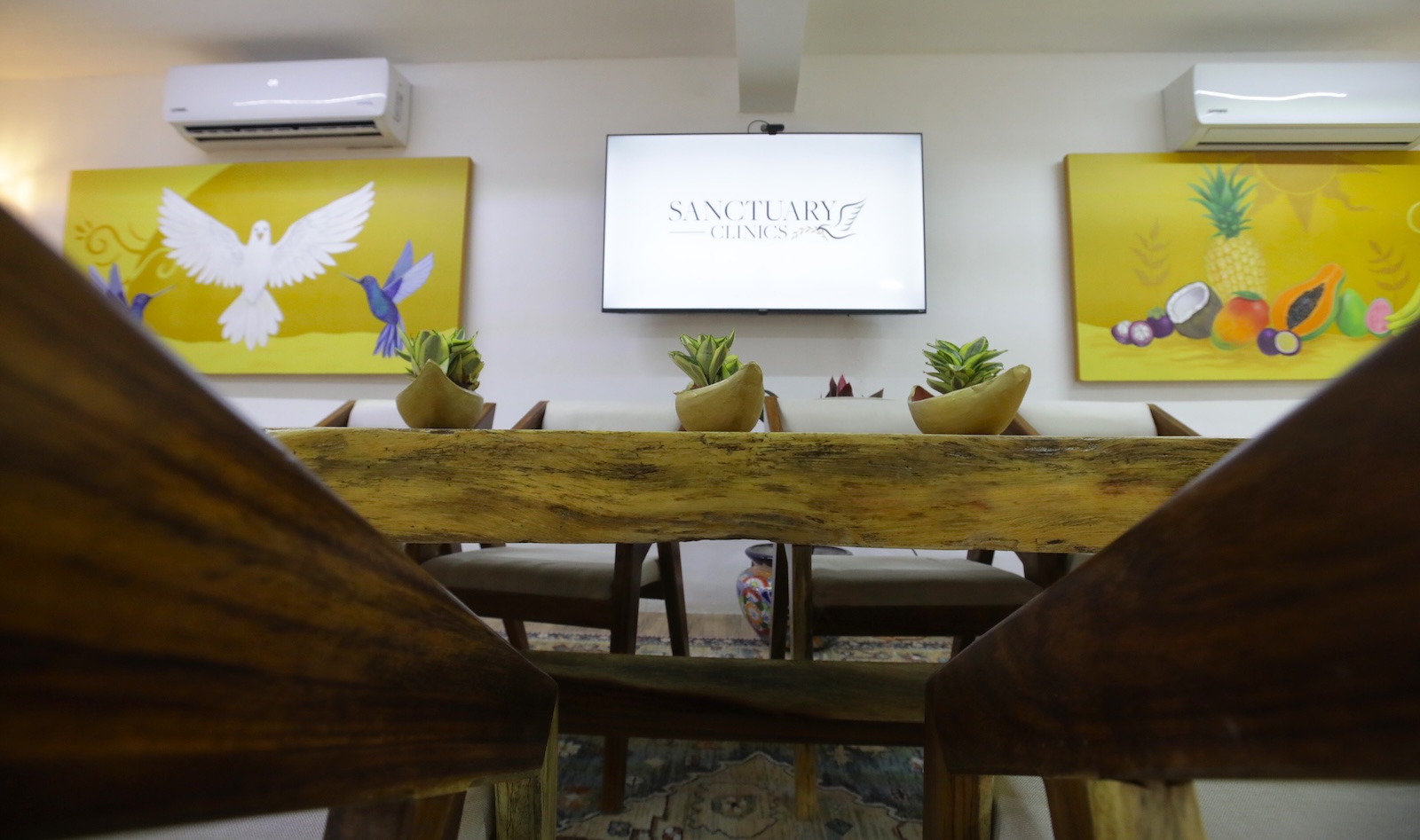
Chapel comes before the first group of the day. You start in worship before you start the hard clinical work, and you do it beside the same people you will sit with in group an hour later.
If mornings at home have meant waking with dread, a set place to be at 9:00, with people who expect you, gives the day a starting point you do not have to manufacture.
-
 02
Individual Therapy and Group Work
The base program includes three individual therapy sessions each week alongside therapeutic groups. Individual sessions are where your own history, diagnosis and faith questions get worked through. Groups are where you practice what you are learning with people who understand it from the inside.
-
 03
Sundays, Church and Saturday Outings
Saturdays are generally kept for outings off the property. Sunday is a Sabbath, and clients attend church in the morning, which keeps worship with a congregation part of your week while you are away from your own.
-
 04
Living in a Small Christian Community
Our program page describes the aim as "loving, authentic Christian community," and the size makes that possible. With 24 beds, the people at chapel in the morning are the people in your evening group and at the dinner table. Evenings after group are free until 10:00, time you can use for Scripture, journaling or rest.
Ask How Faith and Mental Health Treatment Work Together
If you want to know how chapel, counseling and psychiatric care would fit your situation, or your adult child's, ask us directly. We will describe the day honestly, including what it does not include. Call (888) 660-6952.
Clinically Serious?
How Can You Tell Whether a Christian Program Is Clinically Serious?
Ask four questions and expect specific answers: who the psychiatrists are, how medication is handled, what happens in a crisis, and what the stay costs. A program that answers in generalities, however warm its chapel, has not earned your trust yet.
You can ask these on any first call, including ours. Sanctuary's answers follow.

01
Who Are the Psychiatrists?
Ask for names you can look up. Dr. Thomas Rayner is a board-certified psychiatrist who earned his medical degree at the University of Utah School of Medicine and completed his psychiatric residency at the University of Nevada, Reno.
Dr. Ignacio Romero Villa is a Quintana Roo psychiatrist with nearly two decades of practice across adult, child, addiction and forensic care. Both work with a clinical director, a psychologist, a therapist, a medical coordinator and a director of nursing, all named on our clinical team page.


02
How Is Medication Handled?
Ask who reviews your current prescriptions and how they are managed during the stay. At Sanctuary, the evaluation before admission reviews what you take now, and the treatment plan names which medications need coordination. Medications are given at the morning medication pass with breakfast, and standard medical management and care coordination are part of the base rate.
Before discharge, ask who your prescriber at home will be and how your medication list gets to them. A program that takes medication seriously will have planned for that conversation.


03
What Happens in a Crisis?
Ask what the program does if someone becomes unsafe, and what it does before admission to lower that risk. Sanctuary provides 24-hour supervised residential care, with nursing staff on the clinical team. Clinical fit and travel safety are evaluated before admission, and a planned international admission never replaces emergency stabilization.
If someone you love is talking about suicide or cannot stay safe today, call 911 or 988 now. Emergency care comes first, and admissions can talk with your family afterward about whether a planned stay fits.


04
What Does the Stay Cost, and Is It in Writing?
Ask for one number in writing before anyone books a flight. Sanctuary's admissions team confirms the total in plain language, including any added services, before payment, and the full breakdown is in the cost section below.
Conditions We Treat
Which Conditions Does Sanctuary's Christian Mental Health Program Treat?
Sanctuary treats the conditions below in the same Christ-centered residential program, and each one has its own page. Our mental health treatment in Mexico overview explains how residential care works across all of them.


01
Mood, Anxiety and Obsessive-Compulsive Conditions


02
Trauma, Personality and Psychotic Conditions
Program Cost
What Does Christian Mental Health Treatment Cost at Sanctuary Clinics Cozumel?
The standard 30-day residential program costs $4,500 USD per person, paid in full before arrival. Comparable residential programs in the US commonly run $15,000 to $30,000.
Comparable residential programs in the US
$15–30K
$15,000 to $30,000
VS
Sanctuary Clinics Cozumel
$4,500
Standard 30-day residential rate, paid in full before arrival
What the $4,500 Includes
The base rate listed on our treatment cost page covers:
- Residential lodging for 30 days
- All meals
- Three individual therapy sessions per week
- Ten therapeutic group meetings per week
- Morning chapel and Sanctuary community life
- Standard medical management and care coordination
- Welcome, orientation and a 24-hour residential community
EMDR and neurofeedback are priced separately when clinically indicated, and admissions gives you an estimate before you commit.
How the Price Compares With US Programs
For a family that has already paid for outpatient visits, missed work and perhaps an earlier stay that did not hold, the gap between $4,500 and a US bill of $15,000 to $30,000 often decides whether residential care happens at all. Christian donors help Sanctuary keep the rate at $4,500, and it is the only rate we charge.
Payment, Insurance and Superbills
Payment is made in full before arrival. Sanctuary does not offer payment plans, financing, loans or installments.
Sanctuary Clinics Cozumel can provide a superbill that you may submit to your own insurer for possible out-of-network or out-of-country reimbursement. Sanctuary does not bill insurance directly and does not file claims on your behalf. Whether any portion is reimbursed is between you and your insurer, and reimbursement is never guaranteed.
Get a Clear Cost and Program Breakdown
Ask admissions to walk through what the $4,500 covers in your case, and whether EMDR or neurofeedback would add to it. You will have the number before anyone books a flight. Call (888) 660-6952.
Why Cozumel
Why Would a Christian Family Choose Cozumel for Treatment?
Cozumel puts a flight and a stretch of water between you and the phone, the job and the church obligations that have kept treatment from starting. The price and the Christian program are why families look at Sanctuary; the distance is what lets the person in treatment use 30 days well.

01
Distance From the Pressures at Home
If you carry a household, a job and a ministry role at once, a program near home rarely gets your full attention. The texts keep coming, someone needs a ride, and the Wednesday night commitment does not cover itself. In Cozumel those requests wait, and you get 30 days to attend to your own health without apologizing for it.


02
A Small Island Setting With 24 Beds
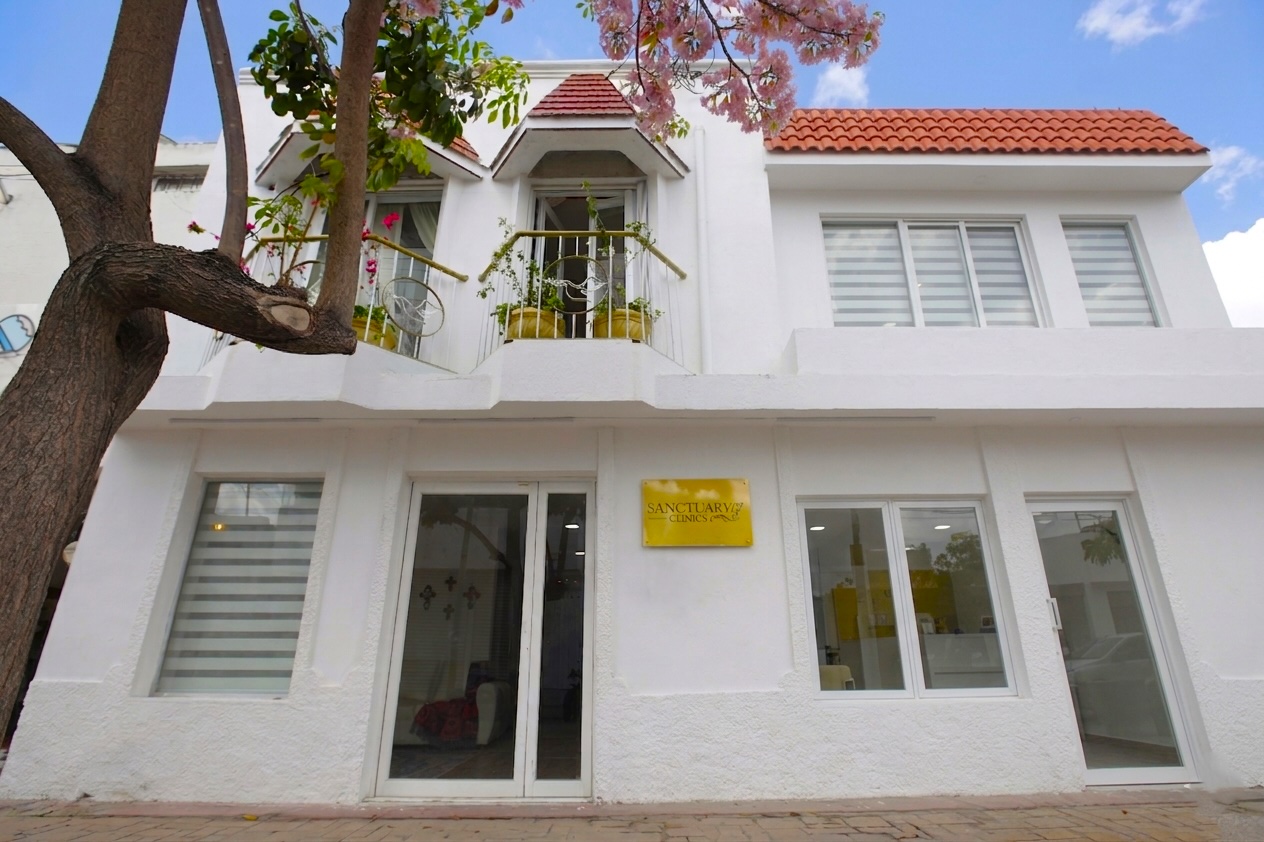
Sanctuary is a 24-bed residential center in Cozumel, Quintana Roo, Mexico. The setting is quiet and the community is small, which suits people worn out by noise and crowds. Walks, sea air and a slower pace make the hours between sessions restful, and the work of getting better still happens in therapy, chapel and medical care.
03
Getting to Cozumel
You book your own travel, and our travel logistics guide walks through getting here. Our team meets arriving clients at Cozumel International Airport or the ferry terminal and brings them to the property.
Admissions and Support
How Do Admissions Work, and How Can Pastors, Churches and Families Help?
Admissions moves through five steps, from a first phone call to arrival, and usually takes two to four weeks. A pastor, spouse or parent can make that first call alongside the person who needs care, or on their behalf.
-
 01
The Five Steps to Admission
Our admissions process follows these steps:
- Initial conversation: an unhurried call about what is happening, what you have tried, and what you want to know about Christian community at Sanctuary.
- Clinical evaluation: a secure phone or video evaluation with one of our doctors.
- Individualized treatment plan and admissions packet: your therapies, any recommended added services, the medications that need coordination, a packing list and travel guidance.
- Cost confirmation and payment: the total in plain language, paid in full before arrival.
- Travel and arrival: you make your way to Cozumel, the first day is gentle, and clinical work begins the next morning.
-
 02
How Pastors and Churches Can Help Before Admission
People in distress often turn to clergy first. The American Psychiatric Association built its Mental Health and Faith Community Partnership around that fact, with the goal of reducing stigma while accounting for both the medical and spiritual dimensions of care.
Clinical source: American Psychiatric Association: Mental Health and Faith Community Partnership
A pastor who has prayed with a family for months is often the person who can finally say it is time to call. Practical help matters just as much:
- Sit in on the first call, with the family's permission.
- Cover church responsibilities so the person can leave for 30 days without guilt.
- Organize meals or rides for the family at home during the stay.
- Pray with the family, and keep the details private.
-
 03
How Families and Churches Can Help After Discharge
Coming home is when many people need their church most. Sanctuary's care continues through aftercare services, an alumni community and its Forever Aftercare program, and your discharge plan should name the doctor and therapist who will see you at home.
Families can prepare through family therapy, learning what changed during the stay and how to support it. Churches help most by welcoming the person back without a spotlight: a seat in the usual pew, a small group that does not ask for the whole story, and patience with a slower pace for a while.
Common Questions
Christian Mental Health Treatment FAQs
Do I Have to Be a Christian to Attend Sanctuary's Christian Mental Health Program?
No profession of faith appears among Sanctuary's admission steps, which focus on your symptoms, history, medications and safety. The program is openly Christ-centered, so chapel, Sunday church and Christian community are part of every week. If you are doubting, angry at God or unsure what you believe, say so on the first call and ask how the program would fit you.
Will Anyone at Sanctuary Tell Me to Stop My Medication and Trust God Instead?
No. At Sanctuary, any change to a psychiatric prescription is a clinical decision made with you by the psychiatric team, based on your evaluation and on how you respond during the stay. No one here will treat a prescription as a measure of your faith, and you can bring any guilt you feel about medication into counseling.
What Denomination Is Sanctuary's Christian Mental Health Program?
Sanctuary's doctrinal statement does not name a denomination. It affirms the Bible as the inspired and only infallible authoritative Word of God, the Trinity, the deity of Christ, salvation by grace through faith in Christ alone, and the present ministry of the Holy Spirit. If you belong to a Baptist, Methodist, Pentecostal or nondenominational church, you can compare that statement with your own church's teaching before you call.
Can My Pastor Stay in Touch With the Clinical Team During Treatment?
Contact between your pastor and the clinical team depends on your written consent, because privacy rules limit what clinicians can share. Tell admissions on the first call that you want your pastor involved, and ask what contact during the stay and before discharge would look like.
Is Chapel or Prayer Required During Christian Mental Health Treatment at Sanctuary?
Prayer runs through the life of the community, so you will be invited to pray often. Whether chapel attendance is expected of every client is a fair question for the first call. Your clinical care does not depend on how well you pray, and a season when prayer feels empty is something to bring to counseling instead of hiding.
Call Us Now
If you have read this far and still wonder whether calling means you gave up on God, it does not. Tell us what is happening at home, and we will tell you honestly whether Sanctuary fits. Call (888) 660-6952.