What Are Symptoms of Drug Withdrawal?
Drug withdrawal symptoms manifest through physical discomfort, psychological distress, somatic complaints, and behavioral changes that challenge recovery efforts. Common manifestations include:
- Muscle aches and joint pain throughout the body
- Nausea, vomiting, and gastrointestinal disturbances
- Excessive sweating and temperature fluctuations
- Anxiety, depression, irritability, and mood instability
- Sleep disturbances including insomnia and fatigue
- Tremors and physical agitation
- Headaches and headache disorders
- Dilated pupils in some cases
- Elevated heart rate and hypertension
- Anhedonia (inability to feel pleasure)
8+ COWS score threshold, hospitalized patients scoring above 8 on the Clinical Opiate Withdrawal Scale experienced moderate-to-severe withdrawal requiring medical management (2018 to 2020 data). The intensity varies significantly across different substance categories, including nicotine withdrawal, caffeine withdrawal, alcohol withdrawal syndrome, cocaine withdrawal, benzodiazepine withdrawal, and antidepressant discontinuation syndrome.
As indicated by the Diagnostic and Statistical Manual of Mental Disorders (DSM-5) diagnostic criteria, withdrawal symptoms create significant distress and functional impairment in social, occupational, or other important areas of daily life. Psychological symptoms, including psychosis in severe cases, often persist longer than physical manifestations, potentially lasting weeks or months after discontinuation.
What Are the Benefits of Drug Withdrawal?
Drug withdrawal initiates recovery by eliminating toxic substances and restoring natural brain chemistry in neurons and the nervous system, enabling long-term health restoration. Physical health improves rapidly as organs, particularly the liver, heart, and lungs, begin healing from substance-induced damage and toxicity. As reported by addiction treatment outcome research and therapy studies, successfully completing withdrawal represents the critical first step toward sustained recovery and sobriety.
Mental clarity returns progressively as neurotransmitter systems and brain receptors recalibrate to function without external chemical influence from drugs used. Financial stability improves dramatically when money previously spent on substances, including recreational drugs and psychoactive substances, redirects toward productive purposes. Relationships damaged by drug abuse and drug addiction begin healing once withdrawal establishes the foundation for behavioral change and treatment of the underlying illness.
What Are the Risks of Drug Withdrawal?
Drug withdrawal poses serious medical risks including seizures, delirium, respiratory complications, cardiac issues, cardiovascular complications, disability, and potentially death without proper supervision by a physician, nurse, or medical team. Severe alcohol withdrawal can trigger delirium tremens, a life-threatening condition characterized by confusion, hallucinations, hallucinosis, and autonomic instability requiring emergency room care. Chronic alcohol use disorder can also lead to alcoholic ketoacidosis, alcoholic liver disease, alcoholic hepatitis, liver failure, cardiomyopathy, and aspiration pneumonia. 5% Per Bureau of Justice Statistics data (2019), only 5% of jail admissions received opioid withdrawal treatment despite 19% screening positive for opioid use disorder, highlighting dangerous gaps in service delivery.
Psychological risks include severe depression, anxiety, suicidal ideation and suicide attempts that demand clinical monitoring and psychiatric care. Dehydration and electrolyte imbalances from vomiting and diarrhea create additional medical complications requiring intervention and intake monitoring. The highest risk period for relapse occurs during acute withdrawal when symptoms peak and cravings intensify dramatically over hours and days.
The kindling effect can lead to progressively severe withdrawal syndromes with repeated attempts. Mortality risk increases without proper medical administration and evidence-based therapy.
Should I Go to a Medical Clinic to Start Drug Withdrawal?
Yes, medical based withdrawal management or inpatient treatment provides essential medical supervision that significantly reduces complications and improves safety outcomes, prognosis, and prevents overdose or opioid overdose. Medically-supervised detoxification offers 24/7 monitoring by healthcare professionals including physicians, nurses, and pharmacists, medication management using medicines like clonidine, gabapentin, naltrexone, diazepam, and buprenorphine-naloxone, and immediate intervention for life-threatening symptoms. +34% Opioid withdrawal presentations increased 34% by 2020 (tracking 2017 to 2020 data), demonstrating growing recognition of professional treatment necessity. Hospitals provide comprehensive assessment tools like COWS that guide evidence-based treatment protocols and clinical practice guidelines.
Severe alcohol withdrawal syndrome, benzodiazepine dependence, barbiturate withdrawal, stimulant withdrawal (including methamphetamine and cocaine dependence), or opioid dependence particularly demands hospital-level care given potentially fatal withdrawal complications. Outpatient withdrawal remains appropriate only for mild cases, such as nicotine dependence from smoking or vaping, or caffeine withdrawal, with low medical risk after thorough clinical evaluation. Comorbid medical conditions, polysubstance use, or pregnant women (to prevent fetal complications) require specialized inpatient care.
What Percentage of Patients Experience Drug Withdrawal Symptoms?
85% Approximately 85% of individuals who misuse opioids experience withdrawal symptoms when discontinuing use without medical support or medications. As per 2017 epidemiological data from the United States National Library of Medicine (NLM), an estimated 11.4 million Americans who misused opioids faced withdrawal upon cessation. The percentage varies dramatically across substance categories including nicotine, caffeine, cocaine, alcohol, barbiturates, stimulants, and addictive substances, as well as individual usage patterns.
According to global prevalence statistics, heavy episodic drinking and alcoholism affects 18.4% of adults globally, with many experiencing alcohol withdrawal syndrome during abstinence attempts. Clinical trials examining buprenorphine-naloxone treatment found 11-14% of patients experienced high sustained withdrawal despite medication assistance and therapy. Individual factors including metabolism, liver function, co-occurring mental disorders and psychiatric illness, drug tolerance, receptor sensitivity, neuropharmacology, and substance purity significantly influence symptom manifestation rates.
What Percentage of Drug Withdrawal Cases End Up in Emergency Department Visits?
Drug withdrawal cases significantly burden emergency departments and hospital emergency rooms, though precise percentages remain challenging to quantify due to underreporting variations and incomplete information. Withdrawal episodes substantially predict emergency department visits among people with substance use disorders requiring urgent medical service. 7.3 Neonatal abstinence syndrome reached 7.3 per 1,000 births by 2022, a 141% increase from 2016 baseline, affecting children born to mothers with substance dependence. Emergency departments provide critical stabilization services when outpatient withdrawal management proves insufficient, addressing complications like seizures, cardiac arrest, respiratory failure, and other severe symptoms.
Healthcare system burden intensifies as withdrawal presentations escalate alongside the ongoing substance use crisis nationally.
What Addiction Treatment Technologies Specifically Target Drug Withdrawal Management?
46% Of emerging addiction treatment technologies specifically focus on substance withdrawal management and symptom reduction, per 2025 systematic healthcare technology analysis. This substantial investment demonstrates recognition of withdrawal's critical role in recovery success. Innovative approaches include:
- Pharmacological agents and medications that minimize physical discomfort and treat withdrawal syndromes
- Digital therapeutics providing real-time symptom tracking throughout the day
- Remote monitoring systems enabling continuous clinical oversight by healthcare providers
- Biofeedback devices teaching symptom self-regulation and stress management
- Neurostimulation technologies modulating brain chemistry and neurotransmitter function
- Artificial intelligence algorithms predicting withdrawal severity based on clinical data
- Mobile applications connecting patients with ASAM resources
- Telemedicine platforms linking patients with psychiatrists and medical professionals
These technologies aim to improve comfort, reduce complications, prevent disability and death, and enhance treatment retention during vulnerable withdrawal periods.
Patient outcomes improve when technology augments rather than replaces human clinical expertise and compassionate care.
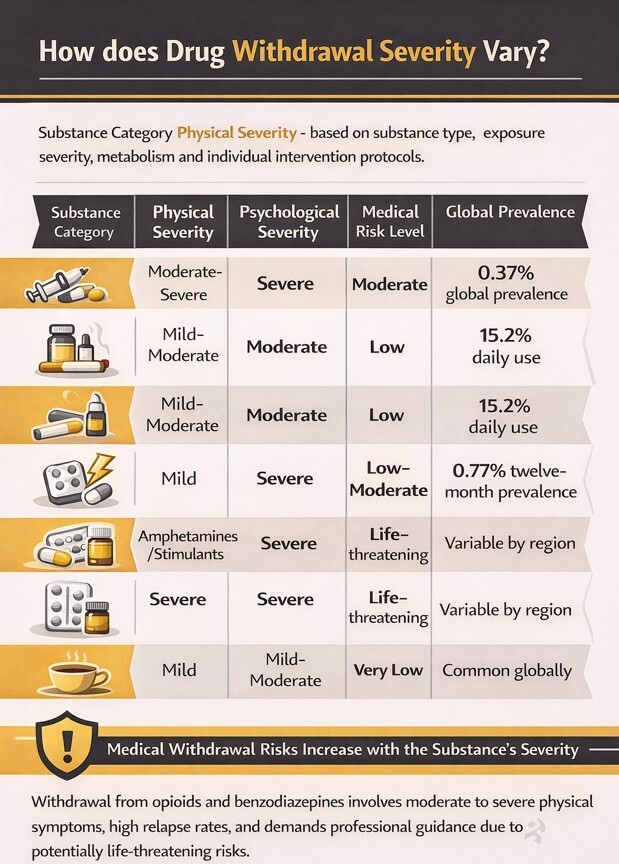
How Does Drug Withdrawal Severity Vary Between Different Substances?
Alcohol withdrawal can progress to life-threatening delirium tremens characterized by seizures, hallucinations, and autonomic dysfunction affecting heart rate, blood pressure, and respiratory function. Heavy episodic alcohol use affects 18.4% of adults globally, with daily tobacco and nicotine withdrawal affecting 15.2%.
| SUBSTANCE CATEGORY |
PHYSICAL SEVERITY |
PSYCHOLOGICAL SEVERITY |
MEDICAL RISK LEVEL |
GLOBAL PREVALENCE |
| Alcohol |
Severe |
Severe |
Life-threatening |
18.4% heavy episodic use |
| Opioids |
Moderate-Severe |
Severe |
Moderate |
0.37% global prevalence |
| Tobacco/Nicotine |
Mild-Moderate |
Moderate |
Low |
15.2% daily use |
| Amphetamines/Stimulants |
Mild |
Severe |
Low-Moderate |
0.77% twelve-month |
| Benzodiazepines/Barbiturates |
Severe |
Severe |
Life-threatening |
Variable by region |
| Caffeine |
Mild |
Mild-Moderate |
Very Low |
Common globally |
Amphetamine and stimulant withdrawal causes severe psychological symptoms including depression, fatigue, anhedonia, irritability, and suicidal ideation despite relatively mild physical manifestations.
Tobacco and nicotine withdrawal produces intense cravings and mood disturbances but rarely causes medical emergencies requiring hospitalization.

How Does Drug Withdrawal Frequency Correlate with Opioid Use Patterns?
Individuals using opioids less than weekly rarely develop physiological dependence causing withdrawal symptoms. As indicated by DSM-5 withdrawal syndrome research, significant correlations exist between withdrawal prevalence and frequency of opioid use including heroin and methadone.
| USAGE PATTERN |
WITHDRAWAL RISK |
DEPENDENCY DEVELOPMENT |
SYMPTOM SEVERITY |
TREATMENT COMPLEXITY |
| Less than weekly |
Minimal |
Low |
Mild |
Simple |
| Near-daily |
Moderate |
Moderate |
Moderate |
Moderate |
| Daily |
High |
High |
Severe |
Complex |
| Multiple daily |
Very High |
Very High |
Very Severe |
Highly Complex |
Near-daily users experience moderate withdrawal risk as drug tolerance develops progressively through repeated exposure affecting receptor function and neurotransmitters.
Daily users face highest withdrawal likelihood as bodies adapt completely to continuous opioid presence, requiring higher doses over time. Intravenous drug use further complicates withdrawal management and increases medical risks requiring specialized medical attention.
Does Drug Withdrawal Work Best in a Rehab Center?
For most individuals experiencing moderate-to-severe substance dependence, a rehabilitation center provides the safest and most effective environment to undergo drug withdrawal. While withdrawal can technically be attempted at home or managed through outpatient settings, rehab centers offer a structured, medically supervised framework that significantly improves both safety outcomes and long-term recovery success. Rehab centers combine round-the-clock medical monitoring with evidence-based pharmacological support, meaning dangerous complications, such as seizures during alcohol withdrawal, delirium tremens, or cardiac events, can be identified and treated immediately.
Healthcare professionals including physicians, nurses, and pharmacists work together to administer medications such as buprenorphine-naloxone, clonidine, diazepam, and gabapentin, tailoring treatment to each individual's withdrawal profile and substance history.
What Is the Risk of Drug Withdrawal Among Long-Term Opioid Prescription Users?
20% Of long-term opioid prescription users face potential risk for physical dependence and withdrawal symptoms upon discontinuation, according to national research. As reported by United Kingdom public health data from 2018, 13% of UK adults, approximately 5.6 million people, received opioid pain medication prescriptions. Extended prescription use fundamentally alters neurochemistry in the nervous system regardless of initial therapeutic intent or legitimate medical indication to treat pain.
Dependence develops through tolerance mechanisms that require progressively higher doses for equivalent pain relief. Risk factors include:
- Prescription duration exceeding three months continuously
- Higher daily morphine equivalent doses and dose escalation
- History of substance use disorders, drug abuse, or alcohol abuse
- Co-occurring mental health conditions or psychiatric disorders
- Younger age at prescription initiation
- Genetic predisposition to addiction and addictive behaviors
- Pre-existing liver disease or liver function abnormalities
- Comorbid illnesses affecting treatment
- Previous experience with withdrawal syndromes
Healthcare providers must carefully balance pain management benefits against dependence risks through regular monitoring, assessment, liver function tests, blood work, and careful administration of medicines. Tapering strategies minimize withdrawal severity when discontinuation becomes medically appropriate.
How Does Tolerance Affect the Severity of Withdrawal?
Tolerance increases the amount of substance the body depends on, and withdrawal becomes more severe as that tolerance level rises. 80% Greater symptom intensity reported by high-tolerance patients compared to low-tolerance individuals, per a study published in the New England Journal of Medicine.